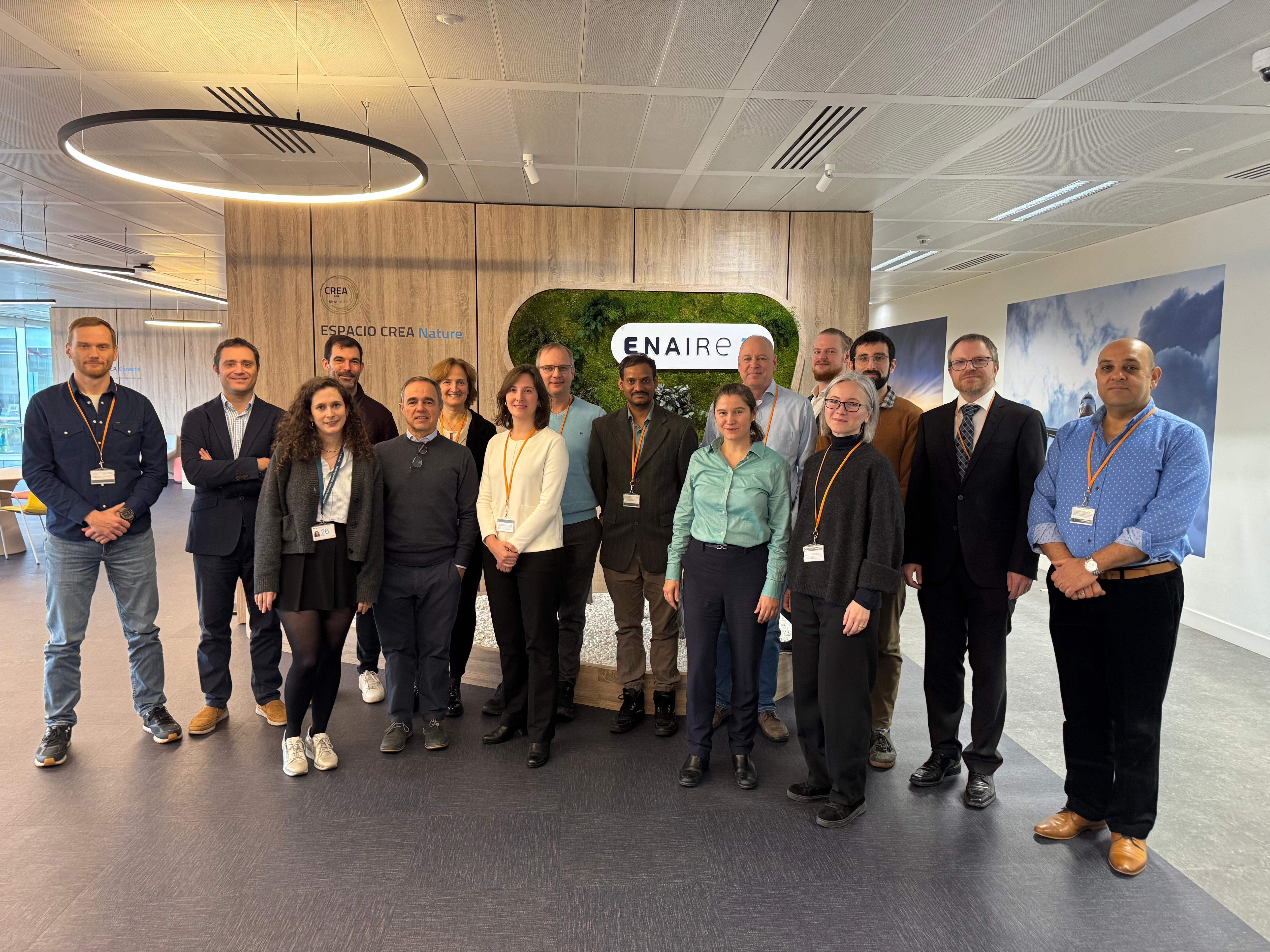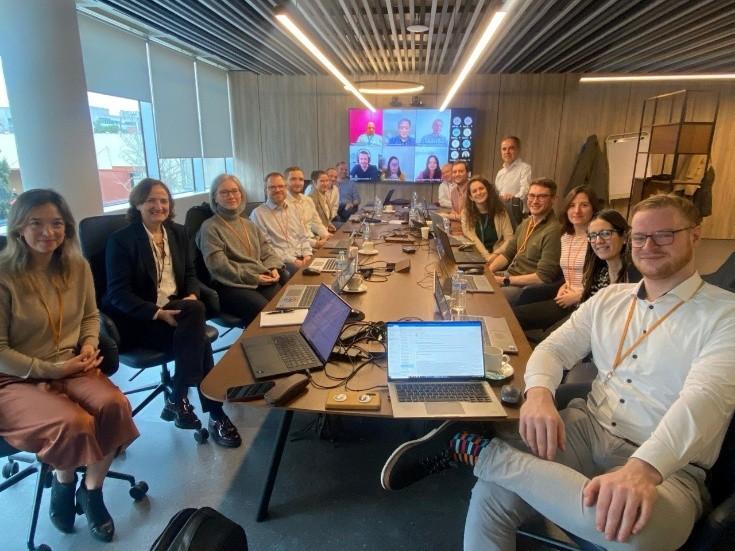




On March 6th – 7th, 2025, barely a year after the beginning of the project, the EGNSS Dual-Frequency/Multi-Constellation for GBAS Based Operations (EDGAR) team meets in Madrid to discuss on the many contributions already achieved within EDGAR, and on the way forward to capitalize them.
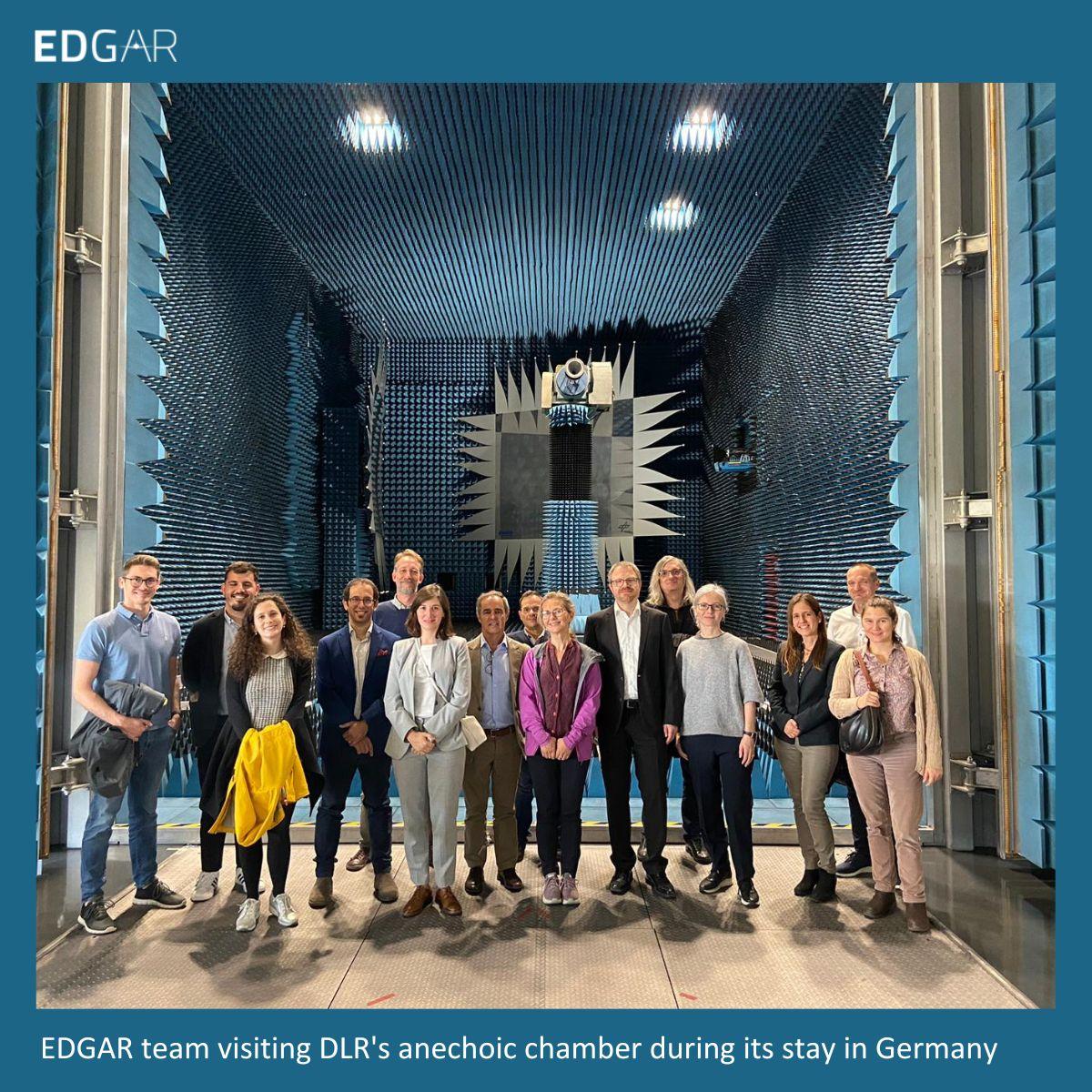
Last October 9th and 10th, EDGAR team meet at the German Aerospace Center (DLR) headquarters in Oberpfaffenhofen (Germany), to make a point on the project status.
During those 2 days of meeting, the team was able to discuss in deep about the technical major aspects of GBAS GAST-E developments, about the research and scientific papers under development, and agree on the next steps to be followed to ensure a success project.
The team was also invited to visit the anechoic chamber at DLR center. This chamber is used to test the MLA antennas used in the GBAS systems, guaranteeing their accuracy and reliability in real environments.
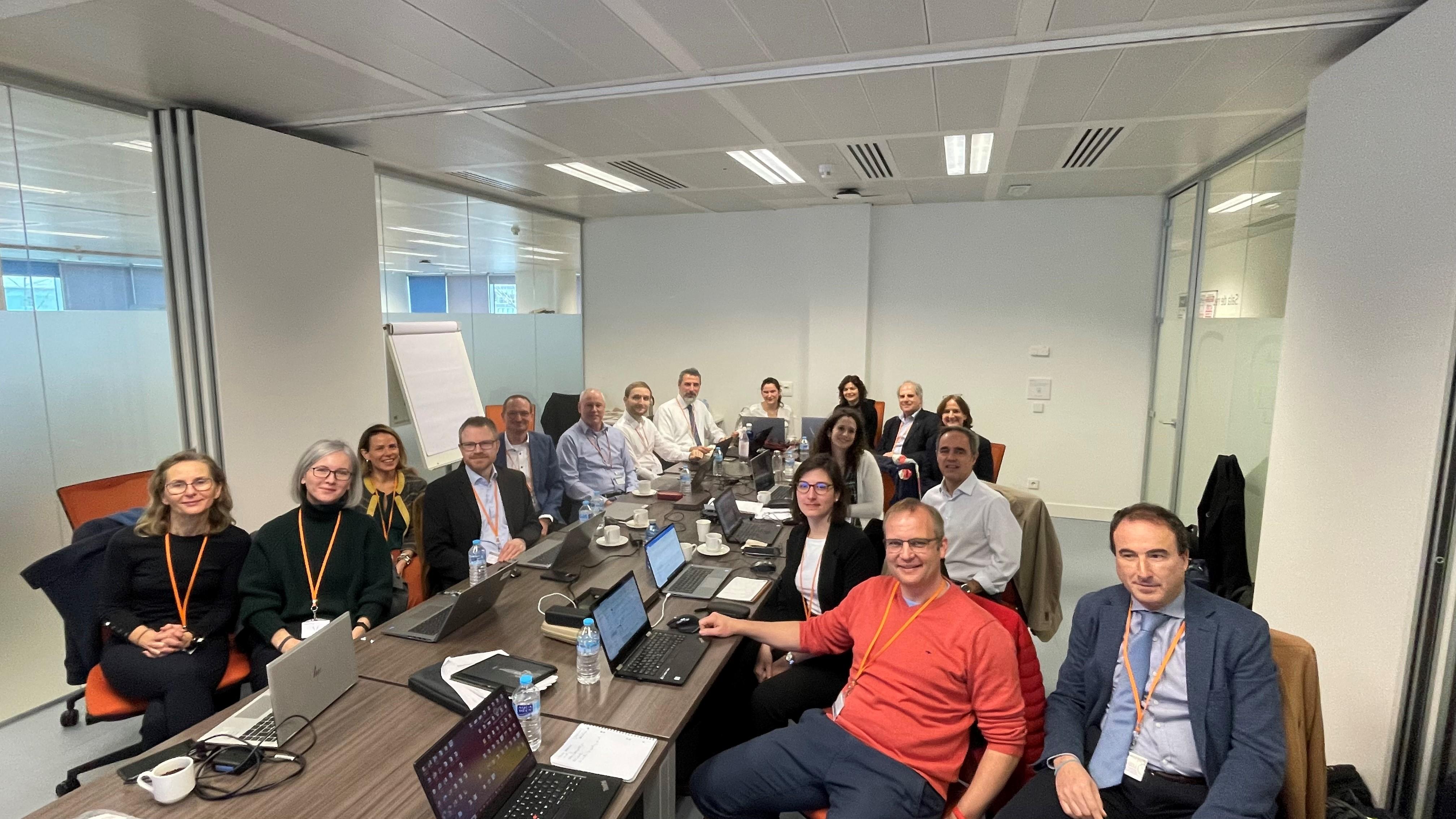
On January 31 st , 2024, the EGNSS Dual-Frequency/Multi-Constellation for GBAS Based Operations EDGAR) project kicked-off at ENAIRE HQs in Madrid.
The Project, partially funded by EUSPA (European Union Agency for the Space Programme) under the Horizon Europe programme of the EU, aims at contributing towards the development of an improved, more reliable, and accurate GBAS solution that responds, on the one hand, to the increasing demand for enhanced approach and all-weather operations in the ever-growing volume of air operations; and on the other hand, to sustainability requirements towards the compliance with EU Green Deal objectives.
Being GBAS an enabler of enhanced approach and optimised descent operations permits the reduction of noise footprints, fuel consumption and emissions, thus contributing to greener flights.
Moreover, this project pursues to contribute to the goal of an early Dual-Frequency Multi-Constellation, or DFMC, GBAS solution that might support more stringent operations and increased robustness, thus rendering benefits to the aviation community.